
Not lazy. Sore. 5 signs your dog's joints need attention
Your dog isn't just getting old. Stiffness, hesitation and shorter walks are often signs of joint discomfort, not age itself.
Joint problems are among the most common health issues in dogs, especially from middle age onwards. Because the changes come on slowly, they're easy to miss or explain away. The good news: the earlier you spot them, the more you can do to keep your dog comfortable and moving.
Here are five signs to watch for.
1. Slow to get up
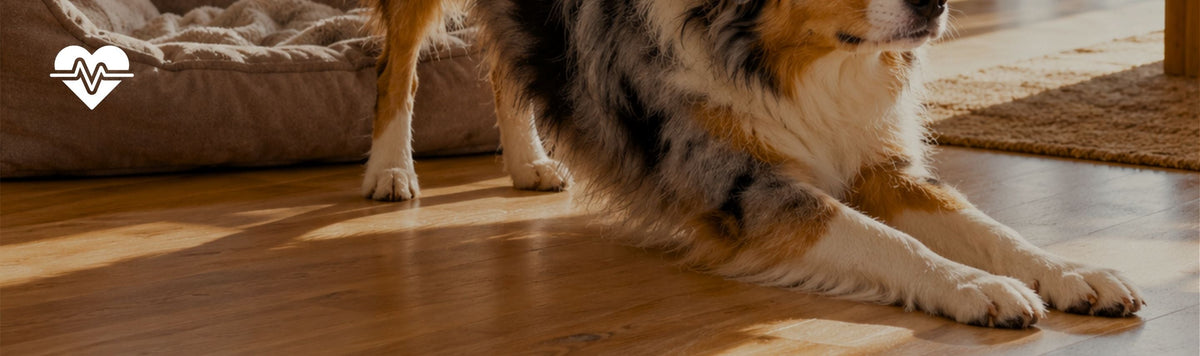
Your dog takes a moment to rise after a nap, pushes up from the front legs first, or stretches stiffly before moving off.
Joints stiffen during rest, so the first steps after lying down tell you the most. Watch your dog in the morning, after a long walk, or when getting up from a cold floor. If it looks effortful, or the stiffness "walks off" after a few minutes, joint discomfort is a likely cause.
2. Hesitates before stairs, the car or the sofa
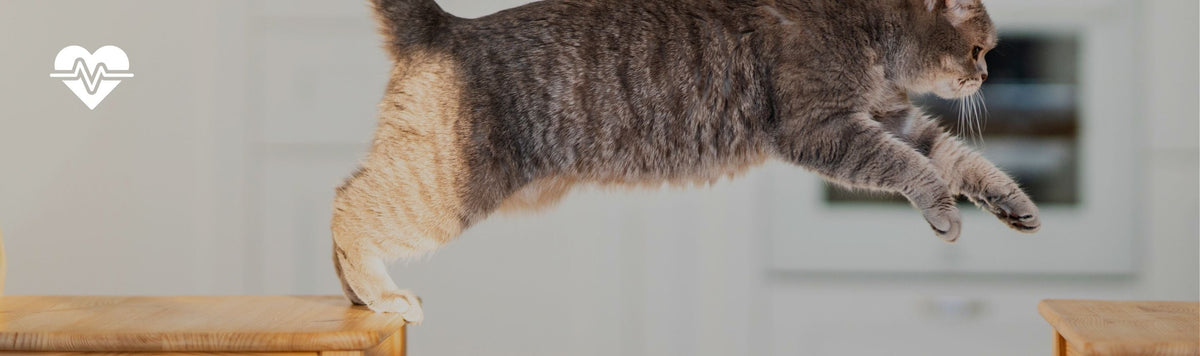
Your dog pauses, looks, and thinks twice. Jumps that used to be automatic now need a run-up, a few false starts, or don't happen at all.
Jumping and climbing put the most load on the hips, knees and elbows. A dog that starts waiting to be lifted into the car, avoids the stairs or no longer joins you on the sofa isn't being stubborn. It's likely avoiding a movement that hurts.
3. Walks are getting shorter
Your dog lags behind, wants to turn home earlier, or sits down mid-walk. Some dogs are fine at the start but slow down noticeably towards the end.
Less enthusiasm for walks often means less comfort, not less interest. Also watch for a change in gait: a slight limp, a stiff or shortened stride, or a swaying back end. Signs are often clearer in cold, damp weather, when stiff joints feel it most.
4. Licks or chews one spot
Your dog keeps returning to the same wrist, knee or hip, licking or nibbling at it.
Persistent licking can be a dog's way of soothing an aching joint. Over time it can leave a damp patch, discoloured fur or irritated skin over the area. Licking has other causes too, such as allergies or skin problems, which is one more reason to have it checked.
5. Grumpy when touched
Your dog flinches, moves away or even growls when you touch its back, hips or legs, or when you dry its paws after a walk.
A change in mood is often a change in comfort. Dogs in chronic pain can become less patient with other pets and children, less playful, or more withdrawn. If your normally easy-going dog has become touchy, take it seriously. It's rarely about personality.
Which dogs are most prone?
Any dog can develop joint problems, but some are more likely to:
- Senior dogs: wear and tear builds up with age
- Large and giant breeds: more weight on every joint, and some are prone to hip and elbow dysplasia
- Large and giant breed puppies: the pace of growth is so steep that it puts significant extra pressure on joints
- Overweight dogs: every extra kilo adds load with every step
- Very active and working dogs: lots of running, jumping and sudden turns
- Dogs with a past injury: an old injury can lead to joint changes later
If your dog fits one or more of these, it’s a good idea to start taking extra care of joint health already early – before any signs appear.
Spotted one or more signs? Here's what to do
Book a vet check. Joint problems have many causes, and a vet can find out what's going on and how to ease discomfort. The sooner, the better.
Keep weight in check. A healthy weight is one of the most effective ways to take strain off sore joints.
Keep moving, gently. Short, regular walks beat one long weekend hike. Avoid lots of jumping, sudden stops and ball-chasing.
Support joints through nutrition. Joint-support foods and supplements with ingredients like omega-3s, green-lipped mussel and glucosamine support joint health and mobility as part of daily care.
Joint problems are common, but they don't have to mean the end of good walks. Spot the signs early, and you can help your dog stay comfortable for years to come.