
Protection and care of a dog’s paws
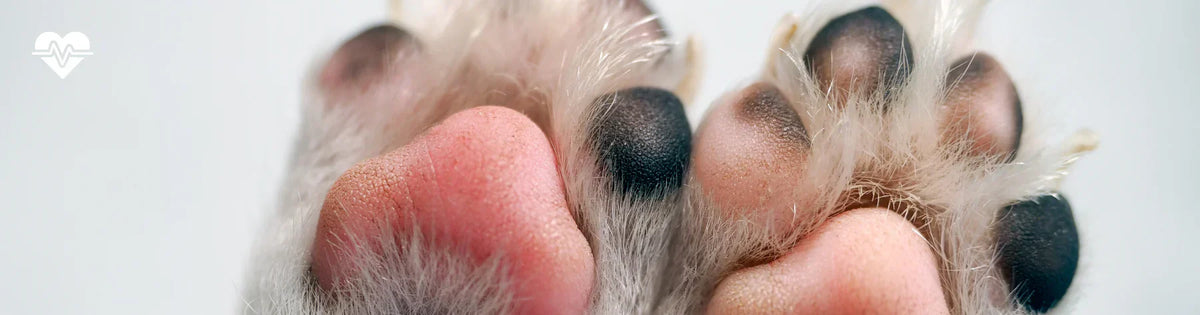
A dog’s paw pads are anatomically designed to withstand wear and tear, but they are not immune to environmental stress. The outer keratin layer of the pad protects the deeper tissues, and beneath it there are abundant nerve endings as well as a fat cushion that absorbs shock. When the keratin layer is damaged or becomes excessively dry, it can result in pain, lameness, and inflammation.
Preventive measures are always easier and more comfortable for the dog than treating existing injuries. In this context, dog boots and paw balm complement each other.
Environmental factors that strain the paws
Winter: cold, ice, and road salt
In freezing temperatures, blood circulation in the superficial layers of the skin decreases, making the skin more prone to cracking. Road salt binds moisture and chemically irritates the skin. The combination of cold and salt is particularly demanding: dry and irritated skin cracks more easily.
Summer: hot asphalt and dry air
In direct sunlight, asphalt can heat up to over 50°C. This increases the risk of superficial burns. Additionally, a dry and dusty environment can make the surface of the paw pads more fragile.
Terrain and mechanical stress
Rocky ground, gravel, forest trails and long runs increase friction. Especially in active and athletic dogs, the paw pads can wear down excessively without protection.
Dog Boots – Mechanical protection and load control
Properly fitted dog boots act as a physical protective layer between the paw pad and the environment.
Benefits from an expert perspective:
-
Prevent chemical irritation: Protect against road salt and other irritants.
-
Reduce temperature stress: Insulate against cold and hot surfaces.
-
Protect against wounds: Prevent cuts from sharp stones and ice.
-
Support healing: Can protect already irritated or mildly injured paw pads (according to a veterinarian’s instructions).
The boots must be the correct size: a model that is too tight impairs circulation, while one that is too loose can cause chafing. The dog should be gradually accustomed to wearing boots using positive reinforcement.
Paw Balm – Supporting the skin’s protective barrier
The purpose of paw balm is not just to “moisturize” the skin, but to also support its natural structure.
Key mechanisms of action:
-
Maintains moisture balance: Softens the keratin layer and prevents cracks.
-
Forms a protective film: Reduces excessive moisture evaporation and protects against irritation.
-
Improves skin elasticity: Elastic skin tolerates mechanical stress better.
Regular use is especially important for dogs that have:
-
recurrent cracks in paw pads or claws
-
a tendency towards atopy or skin problems
-
a high level of exercise on hard surfaces
The balm should be applied to clean, dry paws. The best time is in the evening, so the product can absorb undisturbed.
Combined use – The foundation of preventative care
Dog boots and paw balm do not replace each other; instead, they form an effective combination:
-
Dog boots protect against external stress.
-
Paw balm strengthens the skin’s structure and helps prevent damage from within.
Especially during the winter season, it is recommended to use both in parallel: the balm maintains skin condition and the boots prevent direct exposure to salt and ice.
When should you contact a veterinarian?
If you notice:
-
deep cracks
-
bleeding
-
swelling or lameness
-
intense licking or signs of pain
you should consult a veterinarian for evaluation. Prolonged irritation can lead to inflammation requiring medical treatment.
Paw health is an important part of a dog’s overall well-being and mobility. Preventive protection reduces pain, inflammation, and decreased performance.
Well-cared-for paw pads cope better with seasonal changes and allow for carefree walks in all weather. 🐾