

Not calmer. In pain. 5 signs your cat's joints need attention
Your cat might not be just calming down with age. Quieter, less active cats are often cats in joint pain. Joint problems are very common in cats, especially from middle age onwards – yet they're rarely spotted. Cats are experts at hiding discomfort, and they don't limp the way dogs do. Instead, they quietly change how they move and live.
The signs are subtle, but once you know what to look for, they're hard to miss. Here are five to watch for.
1. No longer jumps up high
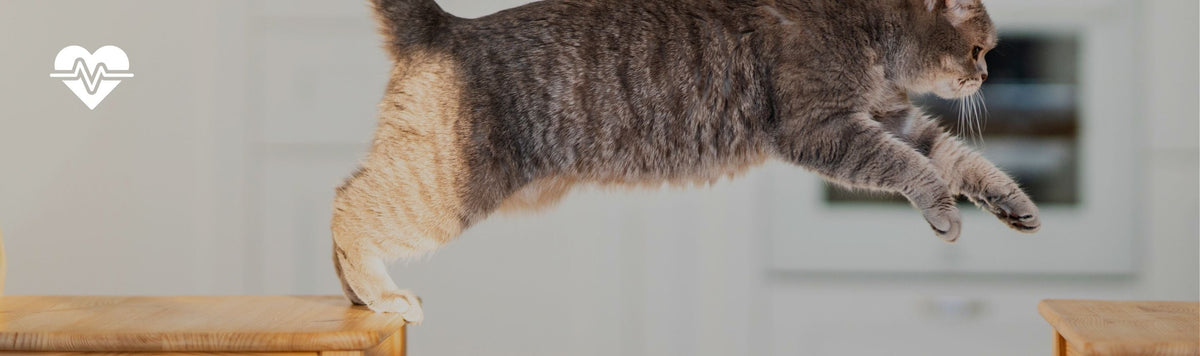
The windowsill, the kitchen counter, the top of the cat tree. Your cat now stays low, or climbs up in stages via a chair instead of leaping straight up.
This is one of the clearest signs of joint discomfort in cats. Watch the way down too: a cat that hesitates before jumping down, or lands heavily and awkwardly, may be protecting sore elbows or hips. Favourite high spots that have been quietly abandoned are a big clue.
2. Grooming less, especially the back
Your cat's coat looks scruffy, greasy or matted, especially over the lower back, hips and tail base.
Grooming takes a lot of bending and twisting. When that becomes uncomfortable, cats skip the hard-to-reach spots. Some do the opposite and over-groom one area, licking a sore joint until the fur thins. Either change in grooming habits is worth noting.
3. Accidents outside the litter box
Your cat starts peeing or pooping just outside the box, or somewhere else entirely.
Stepping over a high edge, squatting, or climbing stairs to reach the box can hurt. A cat that suddenly avoids the litter box isn't being difficult or spiteful. It may simply be sore. Litter box changes can also point to other health issues, such as bladder or kidney problems, so always have them checked.
4. Sleeps more, plays less
Your cat spends more time curled up, ignores toys it used to chase, or no longer meets you at the door.
It's easy to read this as a cat mellowing with age. But less movement and less play are often signs of stiffness, not contentment. Notice where your cat sleeps, too: a switch from high perches to low, warm spots can be a quiet hint that getting up there has become hard.
5. Irritable when handled
Your cat hisses, swats or slips away when you pick it up or stroke along its back and hips.
A change in temper is often a change in comfort. Cats in chronic pain may also become less tolerant of other pets, hide more, or seek less contact with the family. If your affectionate cat has turned grumpy, don't put it down to personality. It may be telling you something hurts.
Which cats are most at risk?
Any cat can develop joint problems, but some are more likely to:
- Senior cats: joint changes become very common from middle age onwards
- Overweight cats: indoor and neutered cats gain weight easily, and every extra gram strains small joints
- Large breeds: heavier breeds such as Maine Coons carry more load, and some are prone to hip problems
- Cats with a past injury: an old fall or fracture can lead to joint changes later
If your cat fits one or more of these, it’s a good idea to start taking extra care of joint health already early – before any signs appear.
Recognise your cat? Here's what to do
Book a vet check. A vet can confirm what's going on and how to ease discomfort. Never give your cat human painkillers, as many are toxic to cats.
Make home easier. A low-sided litter box, steps or a stool up to favourite high spots, and a warm, soft bed at ground level all help.
Keep weight healthy, slowly. A healthy weight takes strain off joints. Weight loss in cats should always be gradual and vet-guided, as strict diets can be dangerous.
Support joints through nutrition. Joint-support foods and cat-specific supplements with omega-3s, green-lipped mussel or glucosamine support joint health and mobility. Pastes, liquids and treats make daily use easy, even for fussy cats.
Joint problems are common in cats, but they don't have to keep your cat off the windowsill. Spot the signs early, and you can help your cat stay comfortable and curious for years to come.