
At-home dental care is the foundation of your pet’s oral health
A pet’s oral health is an important part of its overall well-being. Plaque that accumulates on the surface of the teeth and the tartar that forms from it can cause painful inflammation and affect the health of the entire body. Regular tooth brushing is the most effective way to prevent oral disease and maintain your pet’s well-being.
In this article, we review the basics of pet dental anatomy, explain why regular dental care is important and describe how home dental care is recommended to be carried out in practice. Happy brushing!
Tooth structure
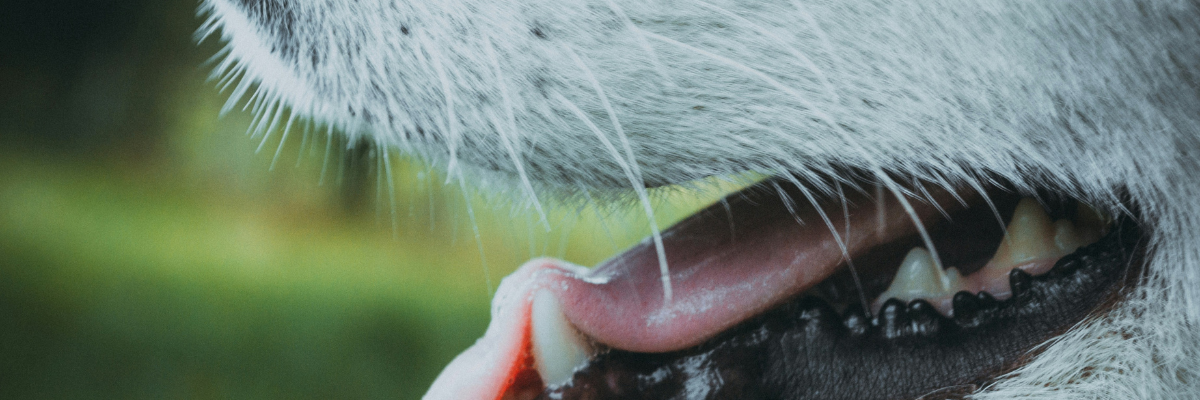
A tooth is a bone-like structure with an enamel surface that is anchored in the bone of the upper or lower jaw. Its main function is to break down and process food. An adult dog has 42 teeth (28 milk teeth), and an adult cat has 30 teeth (26 milk teeth).
The tooth consists mainly of dentin, also known as tooth bone. The visible part of the tooth is the crown, which is covered by hard, light-colored enamel. The part covered by the gums is the root. Dogs’ and cats’ teeth have 1–3 roots, depending on the type of tooth. The function of the gums is to protect the tooth’s supporting tissues.
Inside the tooth is the pulp, located in the pulp cavity that extends all the way to the tip of the root. Blood vessels and nerve fibers reach the pulp through an opening at the root tip.
Tooth Brushing Is the Most Effective Way to Prevent Tartar
Various bacteria are constantly present in a pet’s mouth. Plaque forms when these bacteria accumulate on the tooth surface. This bacterial mass hardens into tartar as a result of saliva composition and bacterial metabolism. Plaque and tartar cause gingivitis (gum inflammation) and periodontitis (inflammation of the tooth’s supporting structures).
The most common symptoms of gingivitis include bad breath, red, inflamed, swollen or bleeding gums, frequent itching around the mouth and inflammation of the lips. Through inflamed gums and wounds in the gum tissue, bacteria can spread through the bloodstream to other parts of the body, such as the liver, kidneys and heart valves.
Because the surface of a tooth does not renew itself, bacterial build up does not disappear on its own. Plaque must be mechanically removed through tooth brushing. With daily home dental care, gingivitis can be prevented and periodontitis can often be kept under control. Regular tooth brushing also makes it easier to detect other dental and oral diseases early (for example broken teeth or oral tumors).
There are significant individual and breed-related differences in plaque formation and tartar development. Factors such as diet quality and saliva composition influence plaque accumulation. In dogs with a normal skull shape and correct bite, tartar does not necessarily develop. For example, gingivitis and periodontitis are not common problems in many hunting dogs if their teeth and mouth are otherwise healthy.
However, in small dog breeds and breeds whose skull shape has been selectively bred to be shorter or longer than natural, tartar formation and even severe periodontitis at a young age are very common. In small breeds, the spaces between the teeth may be narrow or nonexistent, allowing plaque to accumulate easily between teeth and leading to gingivitis and periodontitis.
Especially for breeds prone to periodontal disease, it is wise to begin dental care training already during puppyhood, before the mouth becomes painful. However, it is never too late to start brushing your pet’s teeth, and it will always have a positive effect on oral health. Oral health, in turn, is an important part of the animal’s overall health.
Home dental care
The goal of home dental care is to remove plaque and tartar and prevent new plaque from forming. This is best achieved through tooth brushing. Use a soft, wedge-shaped toothbrush designed for animals or a suitably sized soft children’s or adult toothbrush that fits comfortably in the animal’s mouth. Finger toothbrushes or a rough piece of cloth work well during the initial training phase, but in the long term it is best to switch to a proper toothbrush.
There are toothpastes specifically formulated for dogs, which usually do not contain foaming agents or fluoride, as these can irritate the stomach if swallowed. Human toothpaste should not be used because it is not intended to be swallowed. Toothpaste itself is not essential for oral hygiene, but pet toothpastes are available in various flavors that often make dogs more willing to accept brushing.
Place the toothbrush at about a 45-degree angle against the tooth so that the bristles reach into the gum pockets, and brush with a gentle back-and-forth motion. The most important area to brush is the outer surface of the upper teeth, since the tongue naturally cleans the inner surfaces.
Training can begin by handling the pet’s mouth daily without brushing right away. Learning takes time and at first the focus should be on making tooth brushing a positive daily routine. Progress gradually and begin by brushing only a few teeth at a time. Always reward the dog after brushing with play or a chew bone (preferably not food or treats). Once brushing the outer surfaces works well, you can carefully begin practicing opening the mouth and brushing the chewing surfaces and inner sides.
If tartar still develops despite home care, it is time to schedule an appointment with a veterinarian for a more thorough tartar removal. Home care should definitely continue even after professional dental cleaning, because just like in humans, plaque begins forming on the tooth surface again within a few hours after cleaning.