
What does your dog’s poop say about their health? A guide to colour and consistency
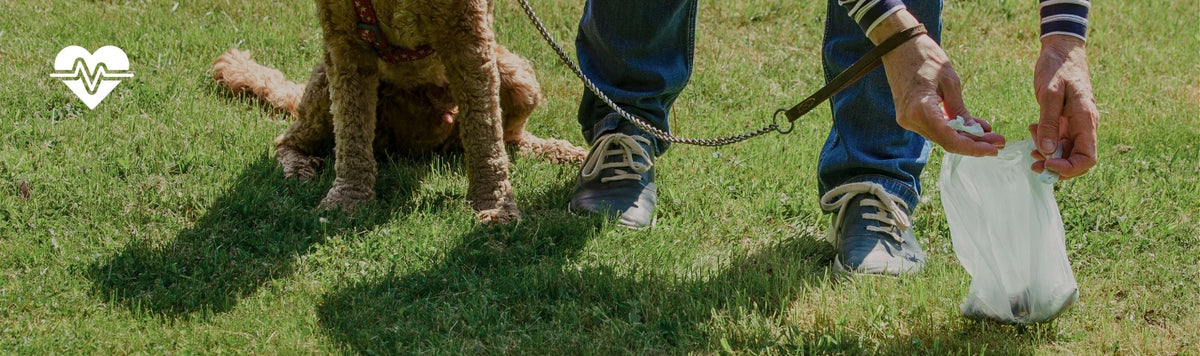
Dog poop is one of the most searched-for dog-related topics – and for good reason. Changes in the consistency of your dog’s poop are easy to spot and can be early signs that something may be wrong with their digestion or bowel function. When you pick up after your dog on a walk, it’s always worth taking a look at their poop. A quick glance can help you spot many emerging health problems before they get worse.
In this guide, our veterinarian walks you through the most common changes in colour and consistency and what they can tell you about your dog’s wellbeing.
What does healthy dog poop look like?
Healthy poop is brown, well-formed and easy to pick up. Small day-to-day variations are normal, but if the colour, consistency or amount of stool changes noticeably, it’s worth trying to find out why.

Your dog’s stool is loose
Loose poop without other intestinal symptoms may indicate that food isn’t being digested properly. When ingredients are difficult to digest, more of the food passes through to the large intestine as waste. There, bacterial fermentation makes the stool loose, while the gases produced in the process can cause flatulence.

Your dog’s stool is pale and loose
Very pale, loose stool, sometimes containing undigested food, may indicate pancreatic insufficiency. However, pancreatic insufficiency also comes with other symptoms, such as weight loss and poor coat condition. Your dog’s appetite may be greater than usual, and dogs with pancreatic insufficiency may sometimes eat inappropriate things.
Your dog’s poop is hard
Overly hard poop is most commonly caused by too little fibre in the diet or insufficient fluid intake. Undigested bone – whether part of the diet or from chewing bones – can also make stools harder. If your dog shows signs of constipation, other possible causes may also need to be ruled out.

Worms in your dog’s poop
If you notice small, pale, elongated pieces resembling grains of rice in your dog’s poop, they are probably tapeworm segments. This finding should be taken seriously and treated with a course of worming medication; contact your veterinarian for advice on choosing the suitable treatment.

Blood in your dog’s stool
If you see bright red blood in the stool, it usually comes from the lower digestive tract. Blood may have mixed with the stool near the end of the rectum or around the anus, for example. Inflammation of the large intestine can also cause visible blood in the stool. Bleeding further up the digestive tract, in the stomach or small intestine, makes the stool dark, almost black.

Mucus in your dog’s stool
A small amount of mucus is normal. Larger amounts, especially alongside other intestinal symptoms, may indicate inflammation of the large intestine, for example.
Your dog’s poop is green or yellow
Green or yellowish stool may result from the intestinal contents moving too quickly, preventing bile pigments from being absorbed normally in the small intestine and causing them to end up in the stool. This rapid passage may simply be due to an acute intestinal upset after your dog has eaten something inappropriate, for example, but other digestive tract problems may also be involved.

When should you see a vet?
A single unusual poop isn’t an emergency in itself. But if the change continues for several days, is accompanied by other symptoms – weight loss, tiredness or vomiting – or if you see blood in the stool, it’s worth booking an appointment with your vet.