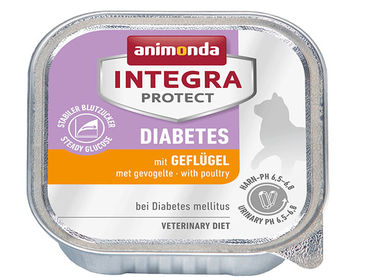


Diabetes hos hund och katt – rätt kost gör stor skillnad
Diabetes är en allt vanligare sjukdom även hos hundar och katter, och utfodringen spelar en avgörande roll i behandlingen. Med rätt kost kan man bidra till att stabilisera blodsockret, stödja viktkontroll och förbättra husdjurets livskvalitet. I den här artikeln går vi igenom vad diabetes innebär, hur sjukdomen yttrar sig samt vilka utfodringslösningar som bäst stödjer välbefinnandet hos ett diabetiskt husdjur.
Författare: Veterinär Henna Söderholm
Vad innebär diabetes?
Diabetes är ett samlingsnamn för ämnesomsättningssjukdomar där regleringen av blodsockret är störd, vilket leder till förhöjda blodsockernivåer. Hos både hundar och katter är den vanligaste formen Diabetes mellitus, även kallad sockersjuka.
Normalt regleras blodsockret av insulin som produceras av bukspottkörteln. Efter en måltid stiger glukoshalten i blodet, vilket gör att bukspottkörteln frisätter insulin. Insulinet binder till insulinreceptorer på bland annat muskel-, fett- och leverceller, vilket gör att glukos kan tas upp i cellerna och användas som energi eller lagras för senare behov.
Vid diabetes är insulinproduktionen nedsatt eller så fungerar insulinreceptorerna sämre. Det leder till att glukos inte kan tas upp i cellerna utan stannar kvar i blodet, vilket orsakar förhöjt blodsocker.
Vad orsakar diabetes hos hund och katt?
Hos katter är diabetes ofta kopplat till övervikt, vilket minskar vävnadernas insulinkänslighet. Bukspottkörteln kan producera normalt med insulin, men kroppens celler svarar inte tillräckligt på det. Resultatet blir ett kroniskt förhöjt blodsocker.
Hos hundar liknar diabetes oftare typ 1-diabetes hos människa, där bukspottkörteln inte längre producerar tillräckligt med insulin på grund av skador på insulinproducerande celler. Ärftliga faktorer, hormonella rubbningar eller vissa läkemedel kan bidra. Även hos hundar förekommer diabetes relaterad till övervikt.
Vanliga symtom på diabetes hos husdjur
Tidiga tecken på diabetes är ofta:
-
Ökad törst och ökat vattenintag
-
Ökad urinering
-
Utspädd, ljus urin
-
Förändrad aptit
-
Trötthet och minskad ork
Vid mer långt gången diabetes kan husdjuret börja gå ner i vikt trots normalt eller ökat foderintag. Andedräkten kan lukta aceton (liknande nagellack) och synen kan försämras.
👉 Kontakta alltid veterinär om du märker avvikande symtom hos ditt husdjur.
Utfodring av ett diabetiskt husdjur – vad är viktigt?
Målet med utfodringen är att hålla blodsockret så stabilt som möjligt och att begränsa intaget av snabba kolhydrater. Regelbundna måltider är mycket viktiga och ska anpassas efter medicinering och motion enligt veterinärens rekommendationer.
Foder för diabetiker innehåller oftast:
-
Hög proteinhalt
-
Måttlig mängd långsamt nedbrytbara kolhydrater
-
Kontrollerad fetthalt för viktbalans
Våtfoder är ofta ett utmärkt val för diabetiska husdjur.
Skillnader i utfodring mellan diabetiska hundar och katter
Hos hundar behandlas diabetes nästan alltid med insulin som ges via injektioner. Därför är fodrets smaklighet mycket viktig, så att hunden äter sin måltid i samband med insulindoseringen och risken för lågt blodsocker minimeras.
Hos katter är övervikt ofta en central faktor. Viktminskning är därför ett av de viktigaste målen. Även en liten viktnedgång kan förbättra insulinkänsligheten, och i vissa fall kan lyckad viktminskning leda till remission, vilket innebär att katten kan bli symtomfri och ibland klara sig utan medicinering.
Skillnaden mellan lättfoder och veterinärdiet för viktminskning
Lättfoder
Lättfoder i vanliga foderserier saknar tydliga lagkrav gällande energiinnehåll. Generellt innehåller de cirka 15 % mindre energi än standardfoder. De är avsedda för mild viktkontroll och innehåller ofta:
-
Mindre fett
-
Något högre fiberhalt
-
Liknande vitamin- och mineralhalter som standardfoder
Veterinärdiet för viktminskning
Veterinärfoder för viktminskning är strikt reglerade och mycket energisnåla. De har:
-
Mycket lågt kaloriinnehåll
-
Hög fiberhalt för ökad mättnad
-
Förhöjda nivåer av vitaminer och mineraler
-
Ibland tillsatta aktiva ämnen som L-karnitin
Dessa foder möjliggör effektiv viktminskning utan att minska portionsstorleken drastiskt, vilket gör bantningen lättare och säkrare.
Vad kännetecknar foder för diabetiska husdjur?
Veterinärfoder för diabetes är utvecklade för att reglera glukosupptaget. De har:
-
Låg total sockerhalt
-
Kolhydrater med lågt glykemiskt index (t.ex. korn eller tapioka)
-
Hög proteinhalt
-
Tillsatta antioxidanter och essentiella fettsyror
Hos vissa varumärken kombineras stöd för diabetes och viktminskning i samma produkt.
Torrfoder eller våtfoder – vad är bäst vid diabetes?
Våtfoder är ofta ett mycket bra val för diabetiker:
-
Låg kolhydrathalt
-
Hög proteinhalt
-
Lägre energitäthet tack vare hög vattenhalt
Våtfoder gör det möjligt att ge större portioner, vilket bidrar till ökad mättnad och bättre viktkontroll.
För större hundar kan dock enbart våtfoder bli opraktiskt. En kombination av torr- och våtfoder är därför ofta den bästa lösningen.
Se alla veterinärfoder för stöd vid diabetes:
Relaterade produkter